
Monreith is a small village on the west side of the Machars peninsula, which I wouldn’t blame you for having never heard of. It is here that a small sculpture of an otter overlooks Luce Bay and a wonderful 6-mile beach walk begins.
I first discovered this walk through a social media post, where a page had shared a picture of ‘Maxwell’s Otter’ in Dumfries & Galloway. It was something I’d never heard of and I’d expected it to maybe be an unremarkable sculpture in a park somewhere.
Instead, I discovered that the otter marked the start of a beautiful coastal walk, which took in a beautiful golden beach, an Iron Age hill fort and a secluded little village in a hidden pocket of Dumfries & Galloway.
Starting at St Medan’s Golf Course
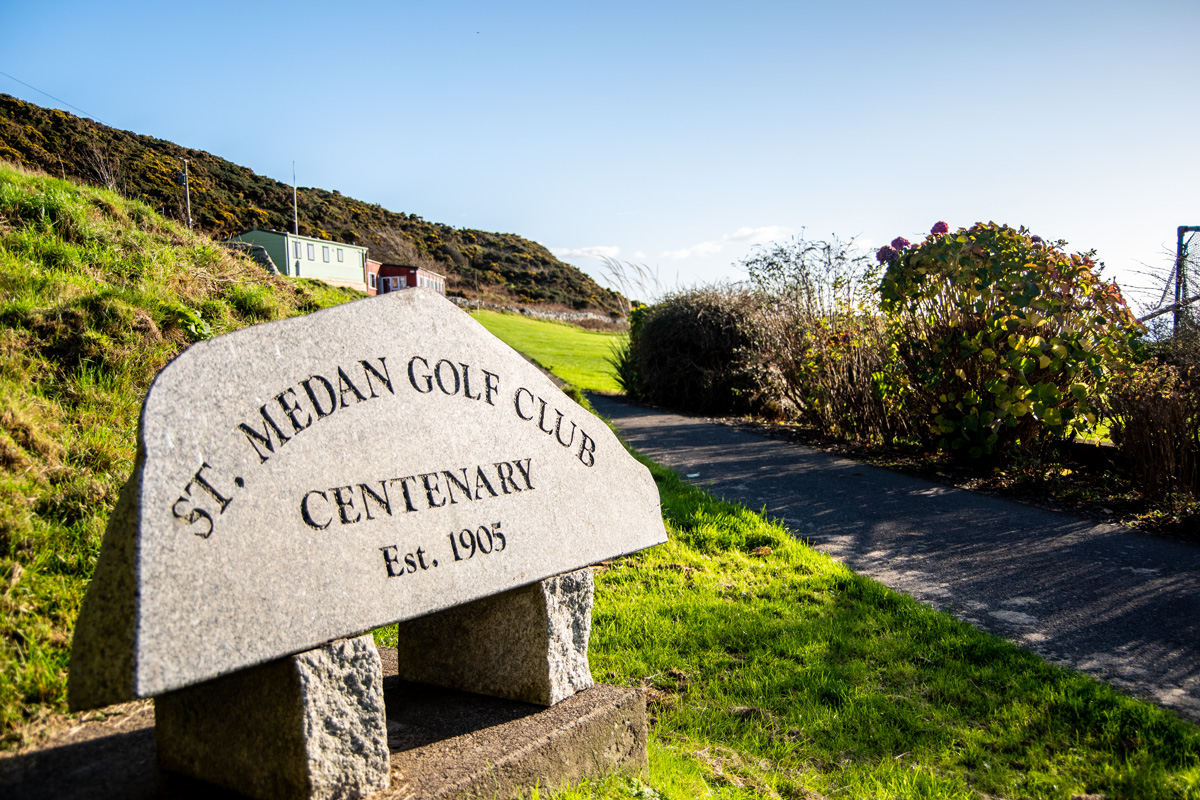
The start point of the walk is just through the little village of Monreith, at St Medan’s Golf Course. This golf course is the most southerly in Scotland and consists of 9 holes and features fantastic sea views in a beautiful, secluded area. Now, I am not a golfer but this seems like quite a special place to say you have played.
A small road cuts through the course and arrives at a little car park at a beach. This is the start of the walk and the spot where I parked on a sunny winters day.
Kirkmaiden-in-Fernis Church
Once I was booted up, I took in the lovely little beach that sits at the bottom of the golf course. It’s a golden, sandy little beach with imposing cliffs and endless views out to sea. It’s a lovely little spot (and even has a toilet!) and one that is worth a visit by itself.
My first stop on the walk was supposed to be Maxwell’s Otter but I wanted to take a little detour to the little ruined church of Kirkmaiden-in-Fernis, which was built in the 17th century and sits just above the beach, nestled below the cliffs which hold Maxwell’s Otter high above.
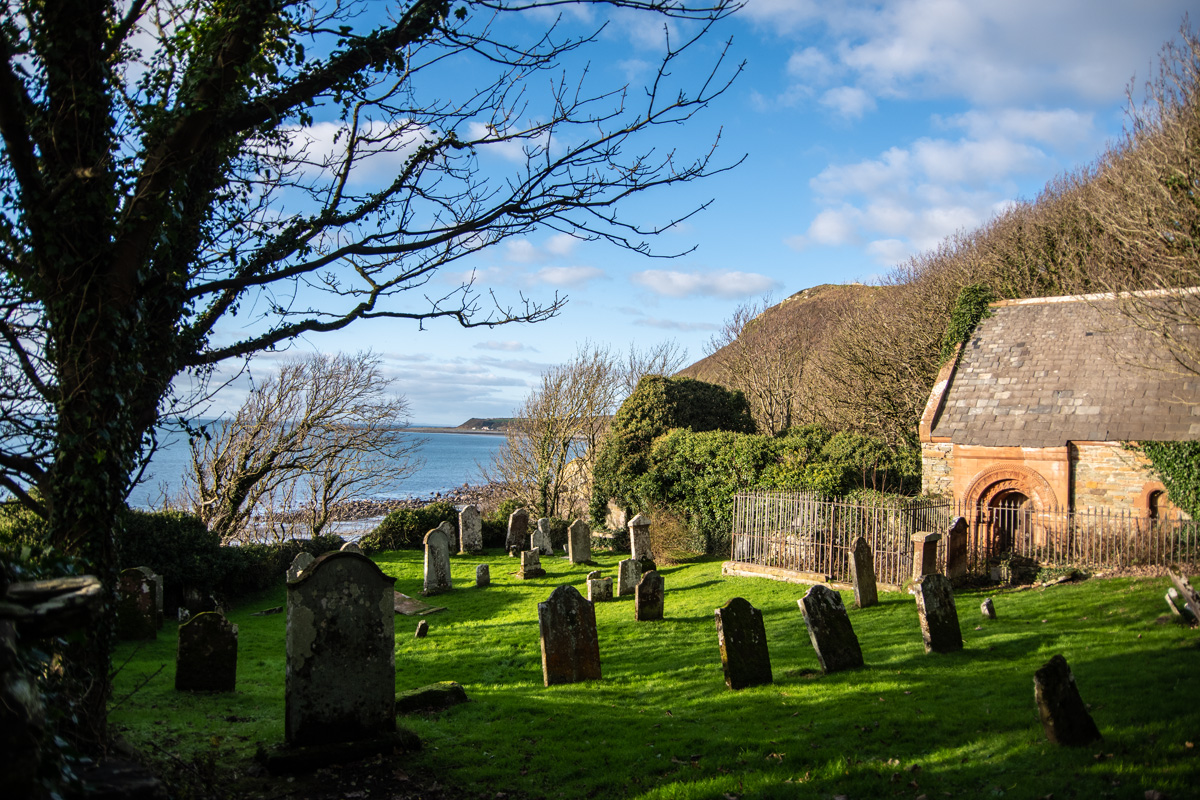
It’s an easy little building to miss (you might see it through the trees as you walk the golf course road up to the Otter) but I’d suggest making a detour to see it! The FutureMuseum website has some interesting historic images of the church, while the Tate Modern holds a painting of it by John Piper.
If this historic little church in it’s picturesque location isn’t enough to pique your interest, then the other fascining aspect of the church is the fact that it’s the burial place of Captain Francois Thurot, a French privateer captain who died on the 28th of February, 1760 after a naval engagment with the Royal Navy during the Seven Years’ War. Thurot’s corpse washed up at Monreith and he was buried with full military honours at Kirkmaiden-on-Fernis at the expense of the local lord.
It’s a fascinating bit of history that most will never know is there.
Maxwell’s Otter
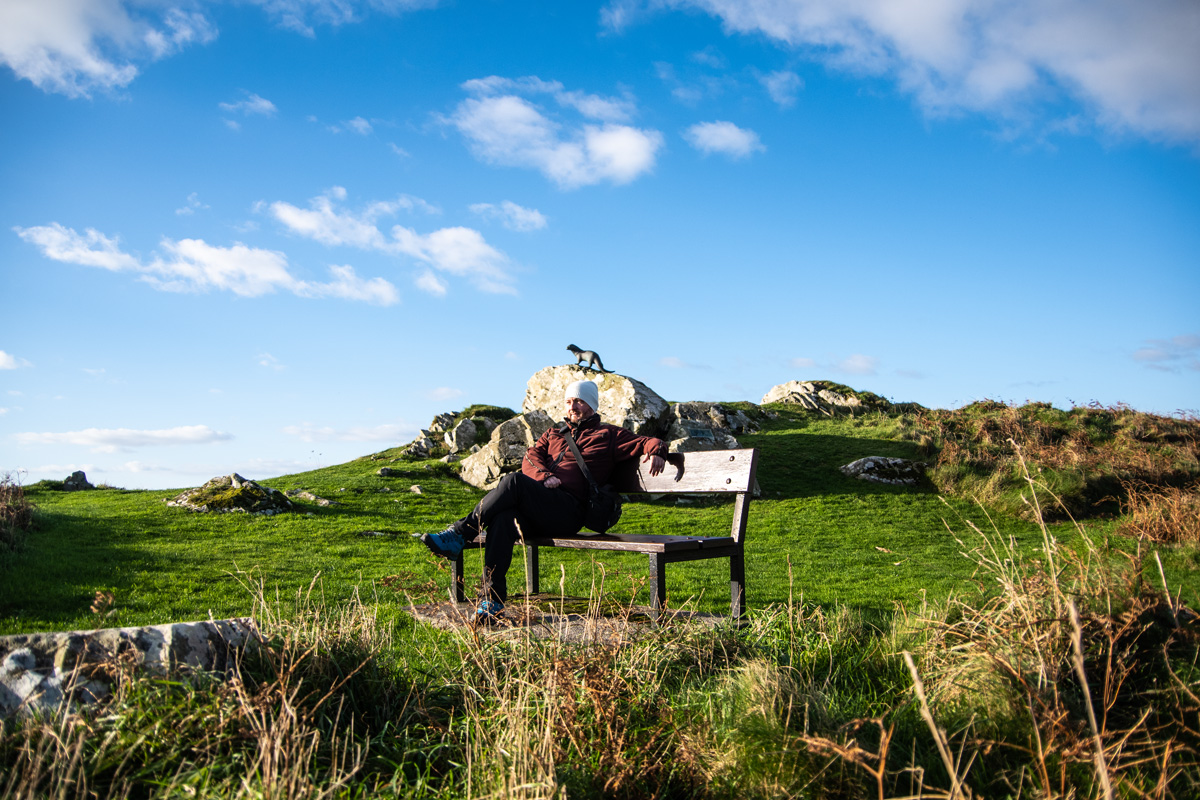
Back on the little golf course road, it’s a 5 minute walk from the church to Maxwell’s Otter, which sits on the top of a hill which overlooks the bay, offering spectacular views over the golf course and out to sea and the Isle of Man.
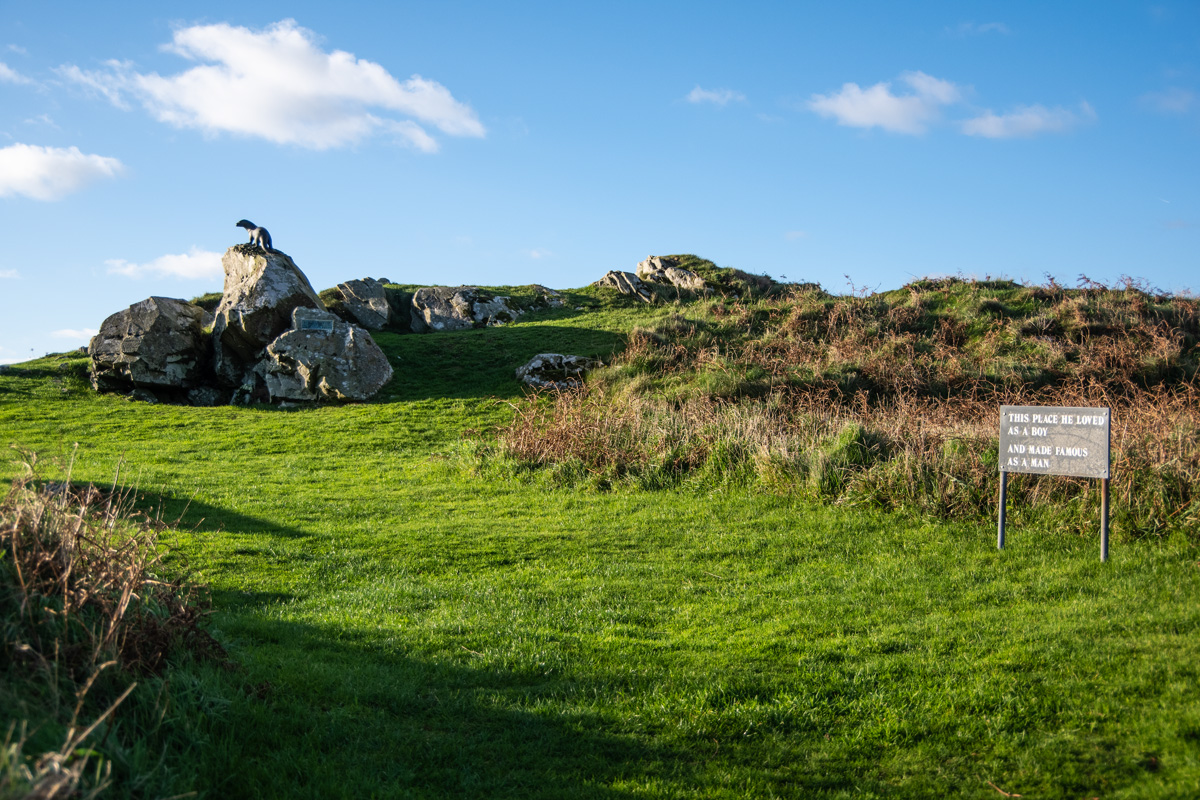
It’s a truly beautiful spot and one I would say is a must-visit if you are in Dumfries & Galloway. I should mention that you can also park at a layby just below the otter (very limited car parking though) and stroll to it in around a minute.
The statue of the otter is a tribute to Scottish author and naturalist Gavin Maxwell (1914 – 1969). He was born at Elrig in Dumfries & Galloway and had a variety of careers. He served in the army during WWII, although he never saw service, having suffered various health issues, and contributed to the war effort as an instructor for S.O.E (Special Operations Eexecutive) agents. Post-war he had a failed basking shark fishing business on the Isle of Soay, before eventually attempting to become a painter.
His true calling was as an author. His first work, ‘Harpoon at a Venture’ was released in 1952 and was well received. His most famous work was ‘Ring of Bright Water’ which he released in 1960. The book described his experiences of raising otters from Iraq and West Africa on the west coast of Scotland.
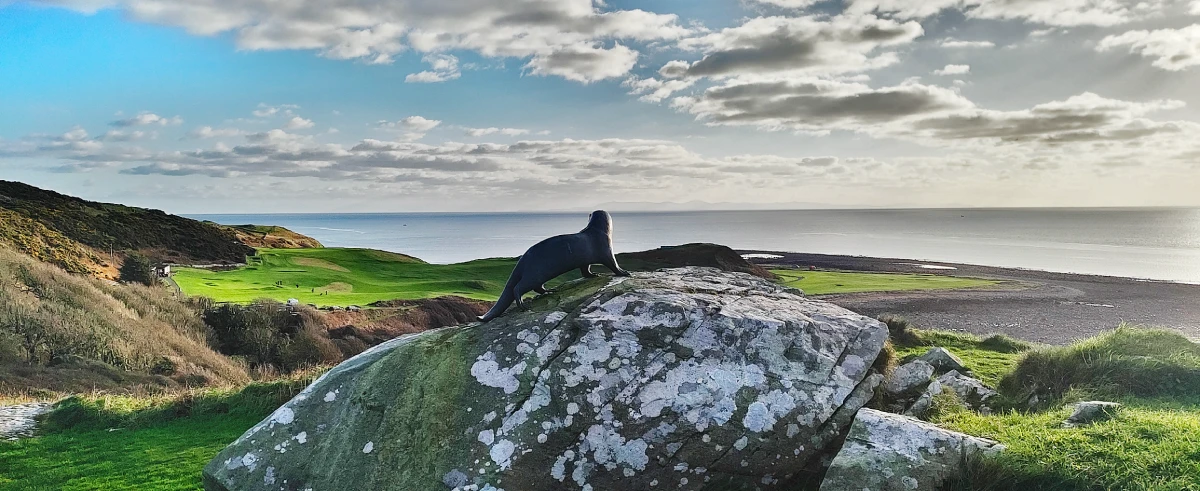
The otter statue at Monreith is of Mijbil, an otter Maxwell had acquired in Basra, Iraq and one of a previously unknown sub-species that would be named after him. He took Mijbil back to Scotland where he exercised him at Monreith beach.
The statue of Mijbil stands overlooking the beautiful beach and gazing out to sea, in the area where he and his master had lived.
Monreith Beach
From the otter statue, the path heads north along the top of the cliffs with multiple benches dotted all along the path. Usually on these walks I think to myself “this could really use a bench” or there is only one bench which makes it a gamble if you can get it! There are no such worries here, so if you are just wanting a gentle little walk to the otter statue, there are plenty of places to stop and soak in the views and the ambiance of this lovely area.
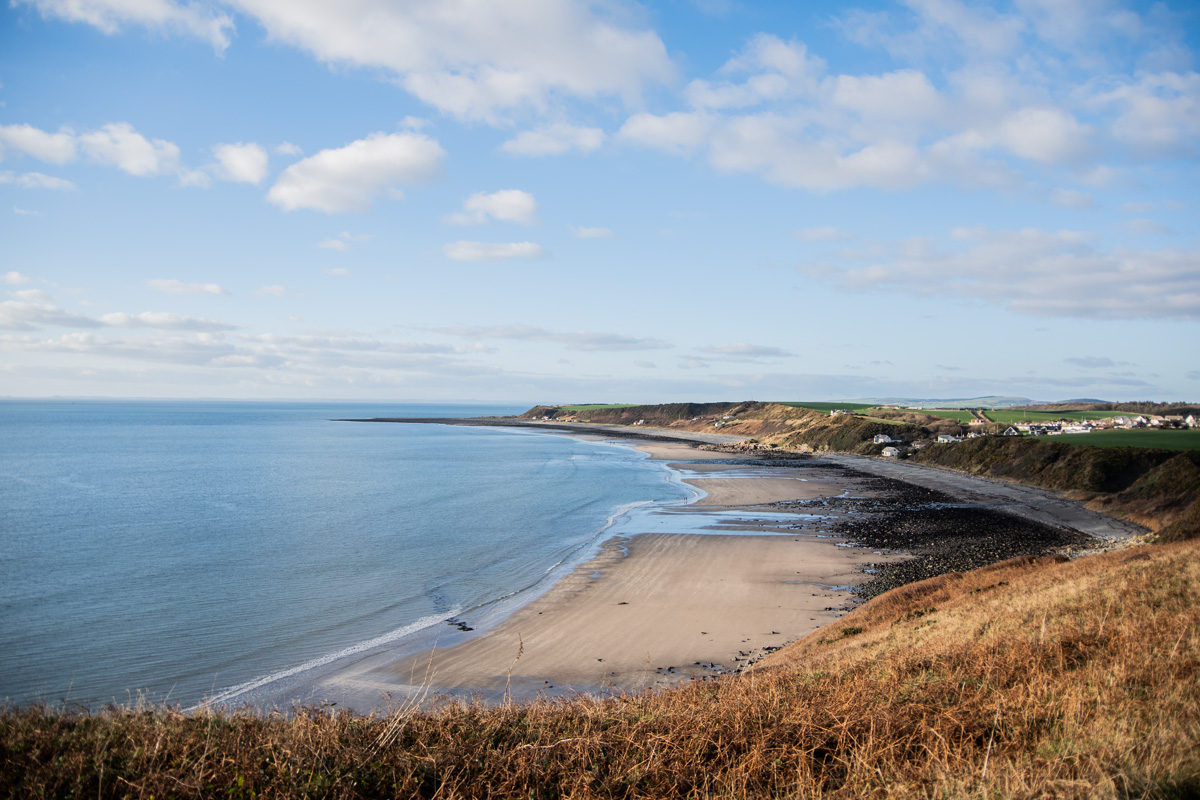
The track briefly enters some fields before heading through a small gate that, then descending to Monreith beach. And what a beach it is!
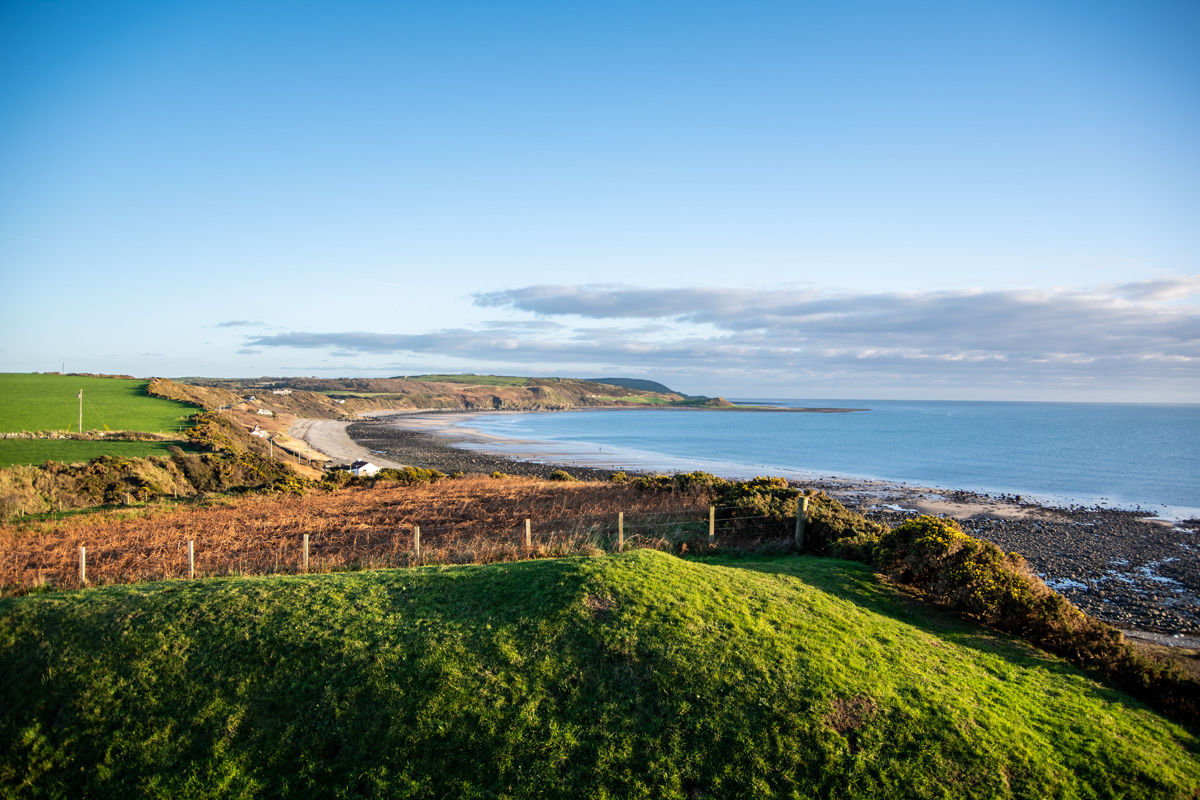
Some of the beaches in Dumfries & Galloway are rocky, some are full of shells and some are huge, gold and flat. This is of the latter variety. I had timed the walk to make sure it would be low tide and the beach that hugged this small part of the Dumfries & Galloway coastline was huge.
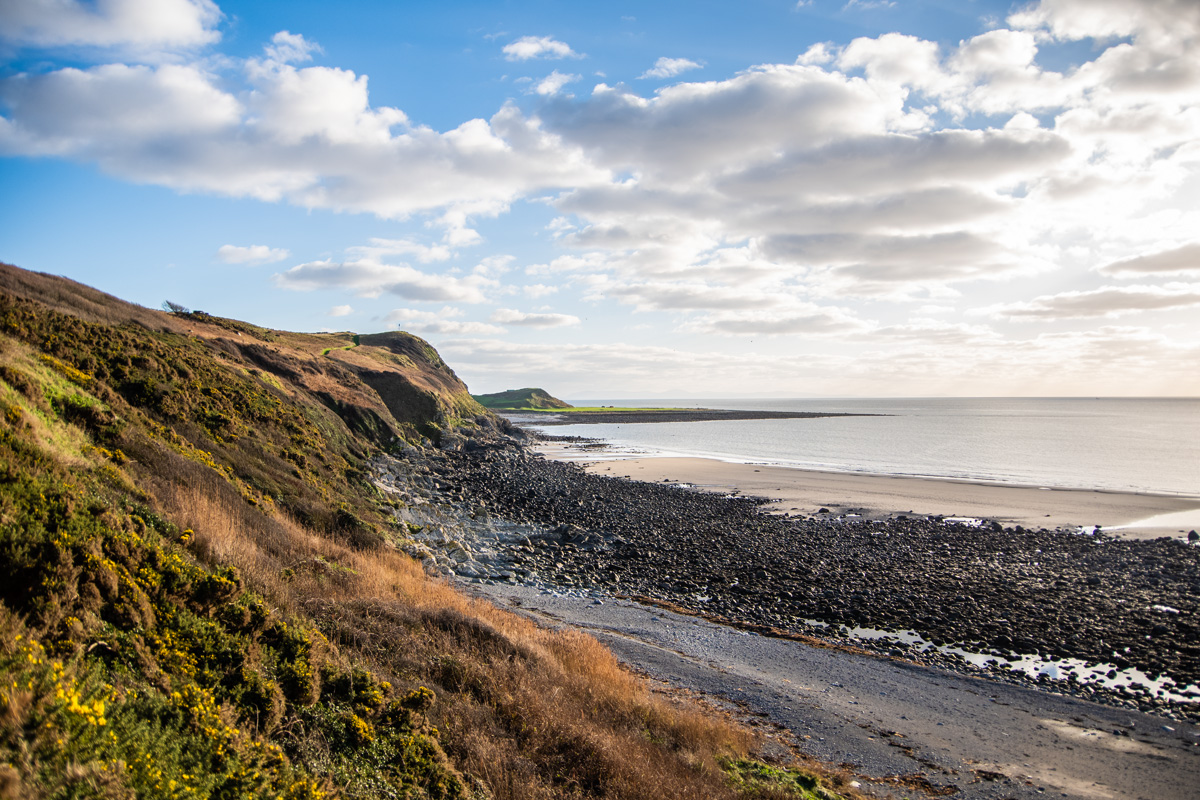
Flat, gold sand spread forth as far as the eye could see. Beautiful coastal houses sat on the cliffs above. Seagulls were drifting on the breeze and little freshwater streams cut through the sand, running down from the hills above and into the sea. It reminded me a bit of the beach at Powillimount but smaller, tighter and more secluded. There was even a man fishing, with both his dogs running around as he did so. It’s just a lovely, idyllic spot.
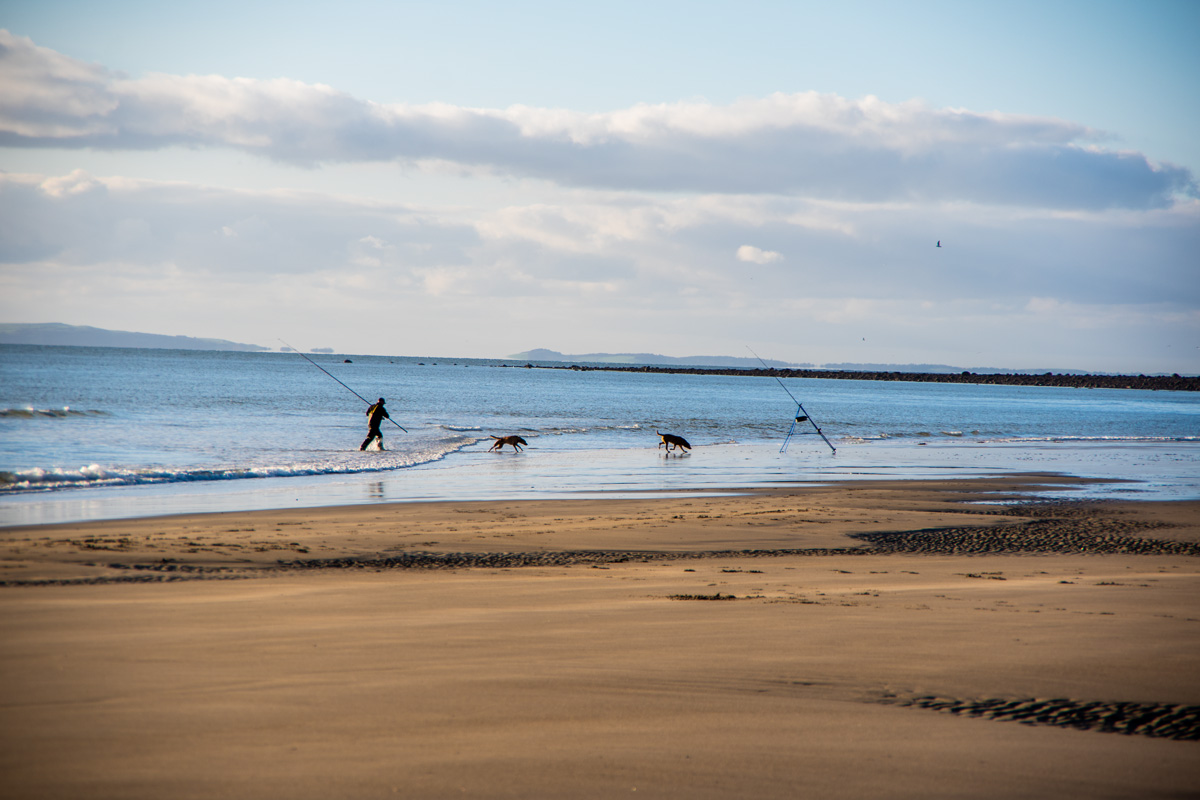
There is also a large lay-by at the west side of Monreith, with (many) steps that drop down to the beach. So if you just wanted a leisurely stroll on a beautiful beach without visiting the otter, this would be a great place to do it.
I hadn’t brought Messi on this one but I will be returning to it very soon, as it’s a perfect place to walk yourself, a dog or, I imagine, an otter.
The Iron Age Hill Fort & Heading Home
The wonderful beach and the otter statue were not my only objectives for the day. As the best part of the beach ends, there is a small track that heads up to the road and you will see a small sign for ‘Barsalloch Fort‘. This is not an essential part of the walk but I was determined to see it!
“Barsalloch Fort was probably a farmstead inhabited by a tribe, known to the Romans as the Novantae. Its defences indicate that it may have been home to a minor chief.
The fort clings to a sea cliff, with views out to the Isle of Man, the Mull of Galloway and the coast of Northern Ireland.“
Barsalloch Fort is the site of an Iron-age hill fort, which stood high on the hill above the sea around 2,000 years ago. It was a farming settlement and today all this is left are the interpretation boards and the curvature of where it once stood.
From the road below it is well sign-posted but has a staircase to climb up to it which is not easy-going or gentle on the knee’s!
It’s definitely a non-essential part of the circuit but if you have an interest in history, I’d suggest making the short detour to see it. The view from the fort above is beautiful and it’s nice to take a little moment to observe the landscape, gaze out to see and think that someone did the same thing 2,000 years prior.
Both Maxwell’s Otter and the fort ‘bookend’ the beach quite nicely.
From this point you have two options, retrace your steps and head home (I’d suggest going back along the beach then up the steps and through Monreith) or head back down from the fort but follow the road north and look for a little farm track that cuts through the fields behind the fort and arrive at South Barsalloch Farm before eventually looping into Monreith.
Whichever one you pick, I’d recommend heading home through Monreith. It’s a quiet, pretty little village and the stroll through it, with the golden rays of the setting sun spread out over the sea, made for a wonderful finale to this walk.
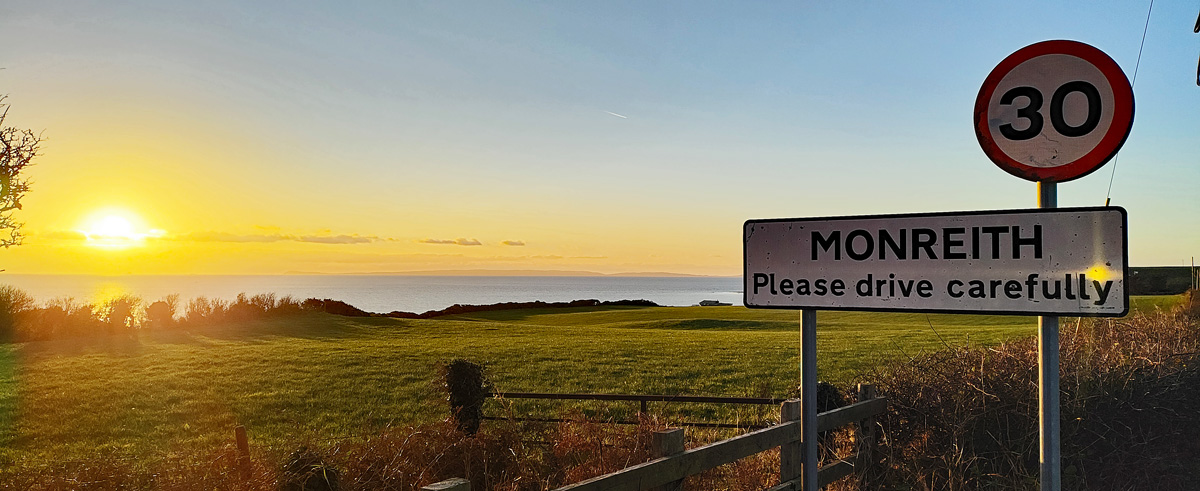
At the south side of the village, there is a little sign for ‘Footpath to Maxwell’s Otter’ which will take you back to the field below the otter statue.
Conclusion
I have to say, I loved this walk and have since walked it again to film it for a future video. Kirkmaiden-in-Fernis is a beautiful little church with some fascinating history in a beautiful spot, the otter statue is the highlight of the walk and is in a gorgeous spot for views over the golf course and out to the Isle of Man, the beach is wonderful and offers an easy walk on flat, golden sands and Barsalloch Hill Fort is a secluded bit of history that overlooks everything.
I’ve done a lot of coastal walking in Dumfries & Galloway and this walk really is something special. It’s not too hard, you can shorten it or lengthen it depending on your ability level and there is quite a lot of history dotted along it.
It has a big, golden beach a bit like the walk at Carsethorn to Powillimount, while it also has some impressive cliffs and a nice village like the nearby walk at Stairhaven. This is one of those walks that I will add to my regular rotation when I just fancy a nice Sunday walk.
Regardless of the time of year, this walk is something special and will be very enjoyable regardless of when you choose to do it.
I’d never heard of Maxwell’s Otter. Now, I am delighted to highlight it on this blog!
Walk Information
Route Length: 6 Miles
Parking: FREE
Car Park Postcode: DG8 8NJ